

Introduction: Size of Cricket Stadium
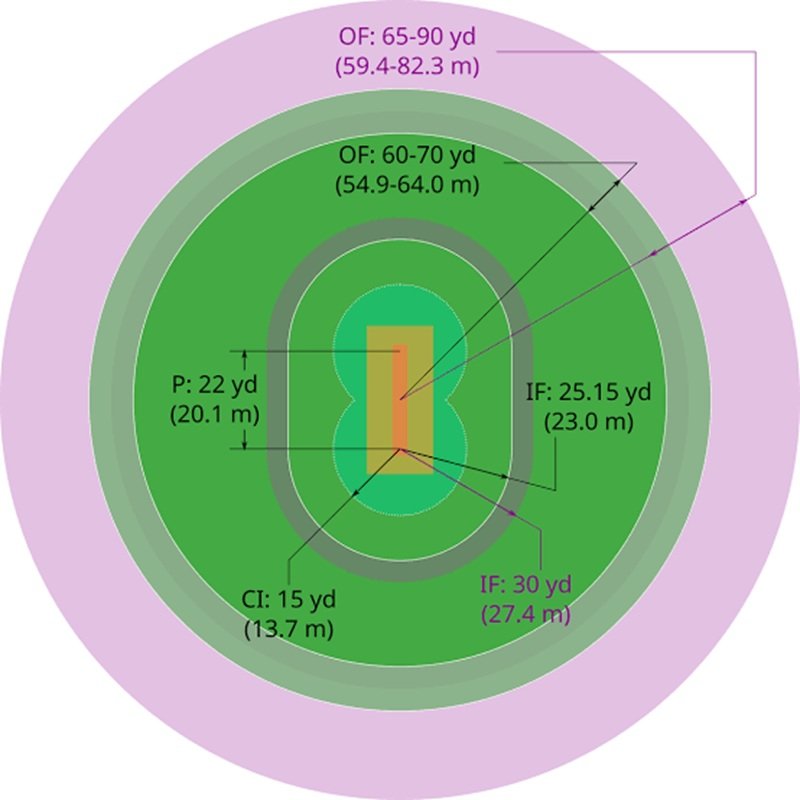
The length of a cricket stadium can vary appreciably depending on its design, region, gambling degree, seating functionality, and the size of its cricket location. Unlike sports activities such as football, in which the gambling challenge typically follows a reasonably slender range of constant dimensions, cricket grounds may also have awesome shapes and boundary distances. One vital component is that the cricket pitch itself has a famous period of 22 yards (20.12 metres). However, the vicinity out of doors the pitch, at the side of the square, outfield, and boundary, can be loads large. For men’s worldwide cricket, ICC gambling conditions generally specify that the boundary want to be no shorter than 65 yards (59.43 metres) and now not than ninety yards (80 .29 metres) from the centre of the pitch.
This way there may be no unmarried standard measurement for the whole cricket stadium or cricket subject. Stadiums are designed in step with the available land, community conditions, protection requirements, spectator centers, and the extent of cricket being completed.
What Is the Standard Size of a Cricket Ground?
A cricket ground is the real playing place wherein the fit takes vicinity. It generally includes the pitch inside the centre, the square surrounding the pitch, the outfield, and the boundary. The boundary isn’t always continuously an exquisite circle. Many cricket grounds are oval, at the same time as others may be barely atypical. This is one motive why the distance from the pitch to the boundary may be unique within the returns of the wickets and at the square additives. For men’s global cricket, the ICC’s gambling situations cause to maximise the playing vicinity whilst keeping the boundary in the distinctive limits. The boundary must commonly be between 65 and 90 yards from the centre of the pitch.
Cricket Stadium Size at a Glance
| Feature | Common Measurement / Requirement |
|---|---|
| Cricket pitch length | 22 yards / 20.12 m |
| Pitch width | 10 ft / 3.05 m |
| Minimum international boundary distance | 65 yards / 59.43 m |
| Maximum international boundary distance | 90 yards / 82.29 m |
| Safety gap from boundary rope to solid objects | 3 yards / 2.74 m |
| 30-yard circle radius | 27.43 m |
| Typical overall playing-field diameter | Varies by venue |
| Stadium seating capacity | Varies widely |
The table indicates why the term “stadium duration” desires to be understood cautiously. The playing region, stadium form, and spectator capability are 3 one of a kind measurements.
Cricket Pitch Size
The pitch is the maximum standardized part of a cricket floor. A fashionable cricket pitch is 22 yards long, which is about 20.12 metres. Its width is 10 feet or 3.05 metres. The pitch consists of the batting creases, bowling creases, popping creases, and wickets. Although the encompassing area can exchange from one venue to some other, the vital pitch follows standardized dimensions. The 22-outdoor distance is crucial as it determines the gap between the 2 devices of wickets. Bowlers deliver the ball from one surrender, while batters stand at the alternative prevent.
Cricket Boundary Size
The boundary is one of the maximum critical factors even as discussing the size of a cricket stadium. For guys’ global cricket, the ICC playing conditions specify a boundary form of 65 to 90 yards from the centre of the pitch. That equals about 59.40 3 to 80 .29 metres. This does no longer mean that every floor has a 65-backyard or 90-outside boundary. Instead, it establishes a selection indoors which the gambling area is generally configured.
A floor with shorter boundaries can produce more fours and sixes, even as a larger ground can praise gamers who run well a few of the wickets and can make boundary hitting greater tough. The ICC moreover calls for a safety run-off of a few of the boundary rope and robust devices which consist of advertising forums, perimeter fences, photographers’ regions, and brilliant structures. The gambling conditions specify a minimal 3-backyard (2.74-metre) gap.
Why Cricket Grounds Have Different Sizes
There are several reasons why one cricket stadium can be hundreds bigger than every other.
1. Available Land
The quantity of land available is considered one of the most important factors. A stadium placed in a crowded metropolis may moreover moreover have confined vicinity, at the same time as a stadium built at the outskirts of a city might also additionally have extensively extra room.
2. Stadium Design
Modern stadiums require masses extra than a playing vicinity. Designers have to provide place for:
- Spectator stands
- Player dressing rooms
- Media facilities
- Practice regions
- Parking
- Security zones
- Hospitality regions
- Food and beverage facilities
- Medical facilities
- Broadcast infrastructure
Therefore, the entire stadium footprint can be considerably larger than the cricket area.
3. Type of Cricket
International cricket, domestic cricket, membership cricket, college cricket, and recreational cricket can be finished on grounds with taken into consideration considered one of a kind dimensions. Professional global venues usually have stricter requirements for the playing region. Local leisure grounds may additionally furthermore have considerably greater flexibility.
4. Safety Requirements
Safety is some other vital attention. Players want sufficient vicinity most of the boundary and fences, advertising and marketing boards, dugouts, and specific systems. ICC gambling conditions require a minimum protection hollow a number of the boundary rope and the number one sturdy item.
Size of a Cricket Stadium vs Size of a Cricket Field
These terms are regularly used interchangeably, however they may not be exactly the same. The cricket undertaking is the region used for gambling cricket. It includes the pitch, square, outfield, and boundary. The cricket stadium consists of the sector plus the surrounding infrastructure. This can embody stands, houses, concourses, parking regions, hospitality zones, media facilities, and one-of-a-kind structures. For example, stadiums may want to have comparable playing-area dimensions but completely particular standard sizes because of the truth one has a far larger spectator complication.
The 30-Yard Circle
Another important length on a cricket area is the 30-outside circle. The internal fielding circle has a radius of approximately 27.43 metres, typically referred to as the 30-outside circle. It is utilized in constrained-overs cricket to adjust vicinity placements. This circle isn’t the boundary of the cricket ground. Instead, it’s far from a field marking located within the gambling area. The distinction is important due to the fact that a person seeking out the “size of cricket stadium” may come upon measurements for the 30-out of doors circle and mistakenly count on that it represents the dimensions of the complete discipline.
How Ground Size Affects Cricket
The dimensions of a cricket vicinity should have a high-quality impact on healthy technique.
Smaller Boundaries
Shorter obstacles ought to make it less difficult for batters to hit sixes. Powerful gamers may have an additional advantage because of the truth a shot does not need to be an excursion as a long manner to pass the boundary. However, shorter obstacles also can create tactical worrying situations for bowlers. They also can want to change their line, length, and discipline placements to lessen scoring possibilities.
Larger Boundaries
Large grounds could make boundary hitting more hard. Batters can also need to rely more on placement, walking a number of the wickets, and controlled stroke play. Fielders additionally have greater region to cowl, that would make athletic fielding specifically vital.
Why Stadium Capacity Is Different From Ground Size
A stadium’s seating functionality does no longer always allow you to know how large its cricket location is. A stadium with 50,000 seats may additionally want to have a gambling location comparable in duration to a few different stadiums with 30,000 seats. The distinction can also additionally come from the amount and layout of spectator stands, hospitality areas, concourses, and other centers.
For this purpose, whilst evaluating cricket stadiums, it’s miles beneficial to look one after the alternative at:
- Playing-vicinity dimensions
- Boundary distances
- Pitch dimensions
- Total stadium footprint
- Seating functionality
International Cricket Ground Requirements
The ICC publishes playing situations for international cricket, which incorporates Test, ODI, and T20I codecs. The current-day ICC gambling-situations web page lists separate guys’s and ladies’s gambling situations and format-particular files. For men’s worldwide cricket, the normally said boundary range is 65 to 90 yards from the centre of the pitch. The objective is to maximize the gambling area at the same time as maintaining the specified safety arrangements. Older worldwide grounds can occasionally have particular exemptions when they can’t meet greater modern minimum dimensions. This is specifically relevant for historic venues which have been constructed earlier than contemporary requirements had been added.
How a Cricket Ground Is Measured
Ground measurements are commonly taken from the centre of the pitch inside the path of the boundary. This is critical due to the reality that a cricket subject won’t be perfectly symmetrical. For example, the without delay boundary on one aspect can also have a one in every of a kind distance from the pitch than the square boundary on every different issue.
Ground personnel also can adjust the boundary rope in the authorized conditions. Therefore, the correct boundary distance can range among fits at the same venue. The ICC states that the boundary is decided earlier than the toss and remains consistent in some unspecified time within the future of the health.
Does Every Cricket Stadium Have the Same Size?
No. There is no single present day favored period for every cricket stadium. The pitch has standardized dimensions, but the gambling place and stadium infrastructure can range. Some grounds have large outfields and long limitations, whilst others have particularly compact gambling regions. Historical grounds also can have unusual shapes due to the reality they had been built spherically cutting-edge roads, homes, or exclusive land guidelines. This variant is one of the right tendencies of cricket.
Factors to Consider When Building a Cricket Stadium
A new cricket stadium calls for careful planning. Developers and cricket government should recollect the following:
- Land availability
- Pitch orientation
- Outfield dimensions
- Boundary distances
- Player protection
- Drainage
- Grass great
- Floodlighting
- Spectator seating
- Parking
- Security
- Broadcast facilities
- Player and expert areas
- Emergency get proper of get admission to to
- Practice facilities
The pitch needs to be nicely located, at the identical time due to the fact the boundary and surrounding areas want to offer good enough space for game enthusiasts. A modern stadium consequently calls for significantly extra making plans than virtually developing a huge grassy discipline.
Importance of Proper Ground Dimensions
Correct floor dimensions are critical for retaining equity and protection. If boundaries are extraordinarily short, positive batting techniques may moreover additionally end up strangely effective. If a subject is reasonably large, game enthusiasts can also moreover face incredible tactical demanding situations. Proper safety distances are also crucial due to the fact fielders regularly run at immoderate tempo inside the course of the boundary while trying catches or preventing fours. The ICC’s boundary hints particularly include a safety run-off, a number of the rope and stable objects.
Final Thoughts at the Size of Cricket Stadium
The duration of a cricket stadium cannot be defined with one everyday variety. The relevant cricket pitch is standardized at 22 yards, however the surrounding playing area can range significantly. For men’s worldwide cricket, the ICC generally makes use of a boundary of 65 to 90 yards from the centre of the pitch, or approximately 59.43 to 82.29 metres.
It is also vital to distinguish between the dimensions of the cricket pitch, the gambling area, and the whole stadium. The stadium includes spectator stands and superb infrastructure, so its overall footprint can be much larger than the cricket area itself. Understanding those measurements enables cricket lovers compare taken into consideration one in every of a kind venues and recognize why a few grounds are appeared for quick barriers even as others are well-known for his or her massive outfields.
FAQs About Size of Cricket Stadium
What is the same vintage duration of a cricket stadium?
There is not any unmarried favored modern day length for every cricket stadium. The pitch is standardized, even as the gambling vicinity and trendy stadium dimensions can range.
How lengthy is a cricket pitch?
A stylish cricket pitch is 22 yards long, approximately 20.12 metres.
What is the maximum cricket boundary distance?
For guys’ worldwide cricket, the most boundary distance is usually ninety yards, or approximately 82.29 metres, from the centre of the pitch.
What is the minimum cricket boundary distance?
For guys’s international cricket, the standard minimum boundary distance is 65 yards, or about 59.43 metres, from the centre of the pitch.
Are all cricket grounds the equal size?
No. Cricket grounds can range in form, boundary dimensions, and modern day gambling regions.
What is the 30-yard circle in cricket?
The 30-outdoor circle is an internal fielding restricted marking used mainly in constrained-overs cricket. Its radius is about 27.43 metres.
Does stadium capability determine cricket ground length?
No. Seating capacity and gambling-region dimensions are separate measurements. A stadium may have a large seating capability while not having the biggest cricket area.
Why do cricket grounds have precise boundary lengths?
Boundary dimensions depend on the venue’s land, format, safety necessities, and gambling situations. This allows cricket stadiums to have one-of-a-kind shapes and difficulty traits at the same time as although working underneath applicable policies.